Getting
Banziger Hulme
To #1 Nationally
on Google
& #1 Nationally
in AI
- SEO & AI Visibility:
Case Study: How Remap Got Banziger Hulme to #1 Nationally on Google and #1 in AI Visibility
From premium expertise to measurable search dominance


They operate in a category where trust matters, credibility matters, and the wrong first impression can cost a serious enquiry before a conversation even begins.
Their clients are often dealing with valuable artwork, deceased estates, insurance valuations, corporate collections, private collections or major buying and selling decisions. These are not casual searches. They are high-intent moments where people need confidence before they make contact.
Banziger Hulme already had the expertise.
What they needed was a digital presence that properly reflected it.
Their website needed to do more than look respectable. It needed to rank, convert, communicate authority, and make it easy for both Google and AI-driven discovery systems to understand why Banziger Hulme should be trusted.
So that is exactly what we built.
The result is a search presence that now spans traditional SEO, AI Visibility and early AI referral traffic — with bhfineart.com ranking #1 nationally for multiple target keywords, appearing in AI-generated recommendation environments, and now showing referral traffic from platforms including ChatGPT, Gemini, Claude and Perplexity inside GA4.
This is what modern visibility looks like.
Not just rankings.
Recognition.
The challenge: trust, competition and a changing search landscape
The fine art valuation category is more competitive than it looks.
Banziger Hulme are not only competing with other independent valuers. They are also competing with auction houses, galleries, insurance-adjacent content, directory-style websites, publishers, and major brands with long-established domain authority.
And because the service is high-trust, users do not simply click the first option and enquire blindly.
They assess.
They compare.
They look for signals of expertise, credibility, experience and professionalism.
That means the website had to work harder than a standard service-business site. It needed to immediately communicate:
- who Banziger Hulme are;
- what they specialise in;
- where they provide services;
- why they are qualified;
- what types of valuation scenarios they handle;
- and why a prospective client should trust them over a cheaper or more generic alternative.
But the bigger shift is what has happened since.
Search is no longer confined to Google’s traditional list of blue links.
Prospective clients are now asking AI tools for explanations, recommendations, comparisons and advice before they ever land on a website. That means the old SEO question — “Do we rank?” — is no longer enough.
The new question is:
Are we one of the brands that search engines and AI systems understand, trust and recommend?
That became the real opportunity.
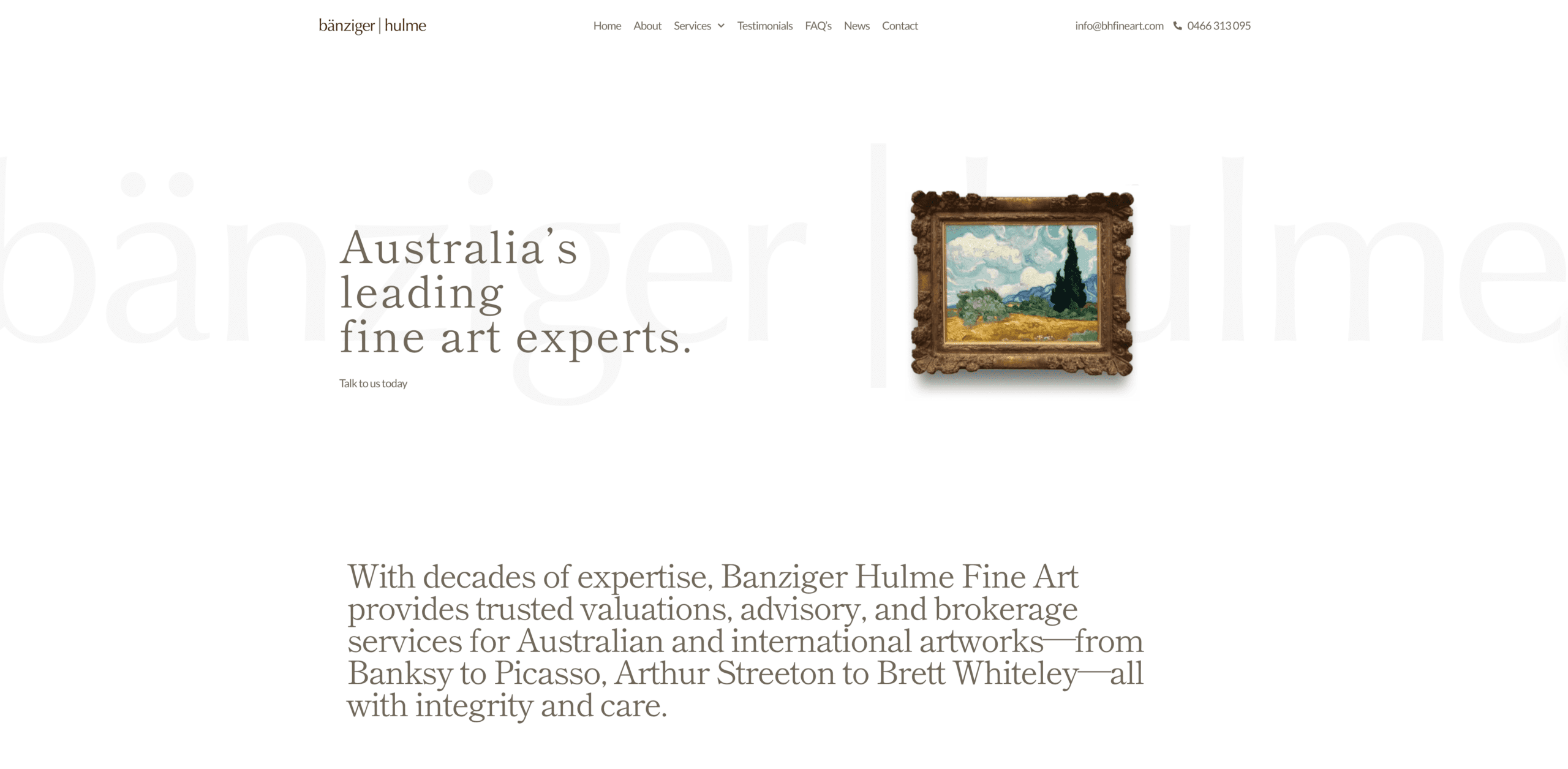
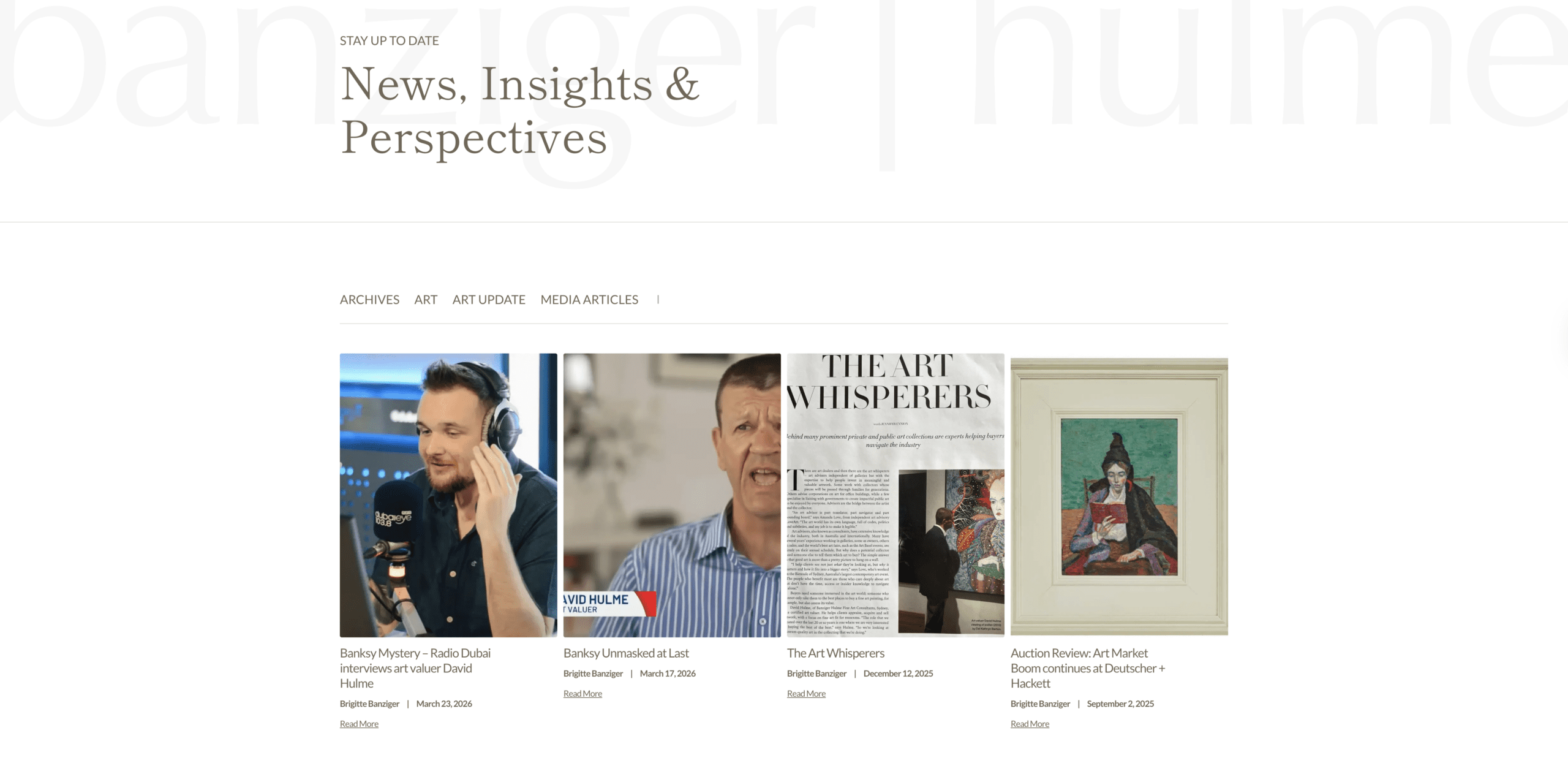
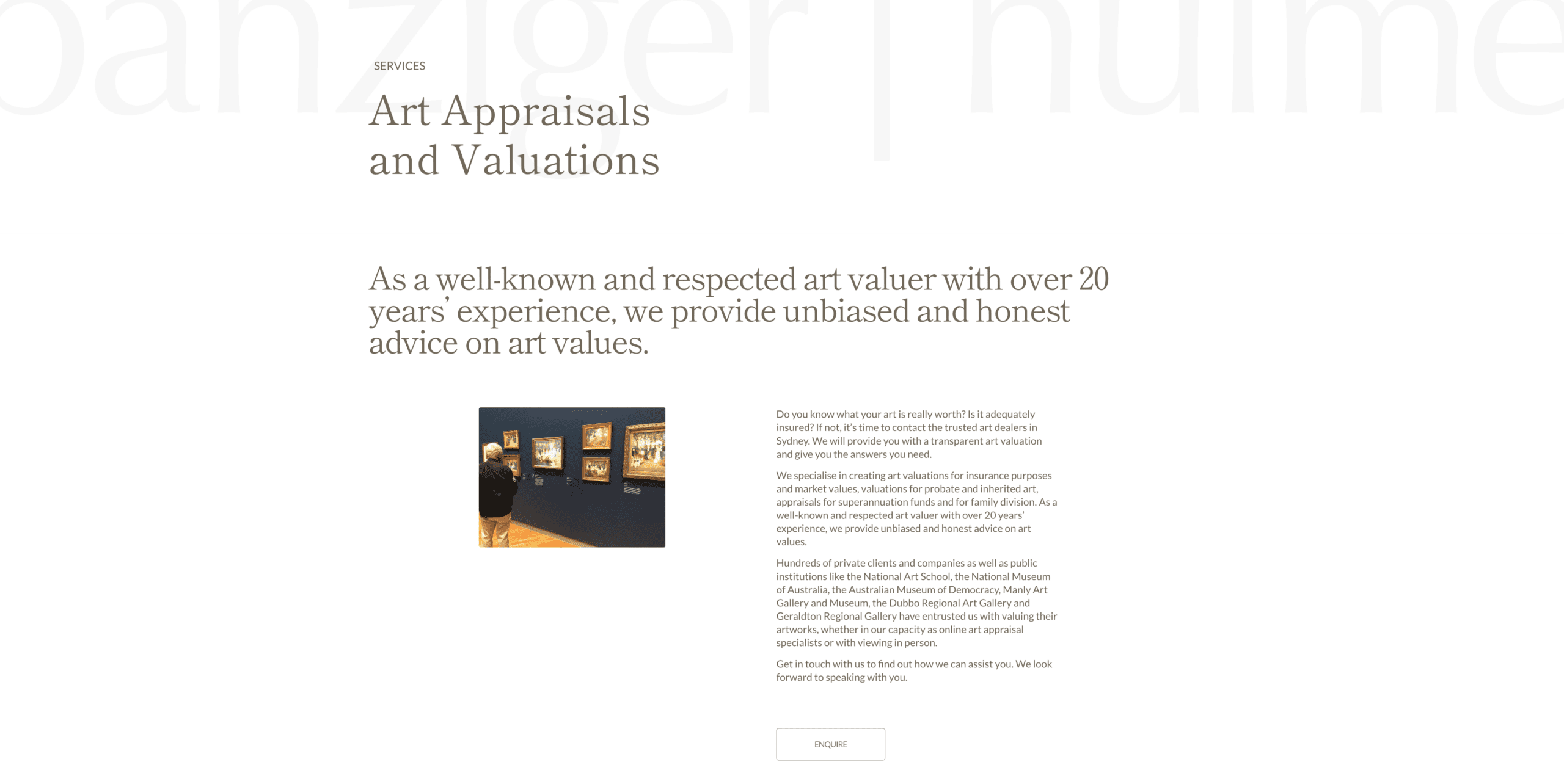
The strategy: rebuild the foundations, then build authority
This was not a “quick SEO tweak” project.
We did not simply rewrite a few title tags and publish a handful of blog posts.
We rebuilt the search foundations from the ground up.
The strategy had three layers:
First, fix the website so it accurately reflected the quality of the business.
Second, build a stronger SEO structure around services, locations, content and authority.
Third, start preparing the brand for the next phase of discovery: AI Overviews, ChatGPT, Gemini, Claude, Perplexity and other answer engines that influence buyer decisions before the website visit happens.
The goal was simple:
Make Banziger Hulme easier for people to trust, easier for Google to rank, and easier for AI systems to understand.
Phase 1: Website redesign — making credibility instant
For a business like Banziger Hulme, design is not cosmetic.
It is a trust signal.
If someone is looking for advice on a valuable artwork, private collection, insurance matter, estate or corporate asset, the website needs to feel calm, established and credible from the first click.
So we rebuilt the site in WordPress with a stronger premium feel, clearer structure and a more conversion-focused user journey.
The new website needed to support both human decision-making and search engine understanding. That meant clearer service pages, better internal navigation, stronger calls to action, and content that explained Banziger Hulme’s expertise in plain English.
The site had to help different types of visitors find their way quickly, including people looking for:
- art valuations for insurance;
- probate and deceased estate valuations;
- private collection advice;
- corporate collection services;
- art appraisal before selling;
- independent expert advice;
- and location-specific valuation support in major Australian markets.
The old goal of “make the website look better” was not enough.
The real goal was to make the website work harder.
Phase 2: Service architecture — turning expertise into search structure
One of the biggest SEO opportunities was structure.
Banziger Hulme offer a range of specialist services, but expertise only becomes visible online when it is organised properly.
So we rebuilt the service architecture around the way people actually search.
Instead of relying on broad, generic pages, we created a clearer structure that allowed Google to understand the relationship between services, locations, topics and intent.
That included dedicated pages for important commercial searches, clearer internal linking, and stronger content alignment around the problems prospective clients are trying to solve.
For example, someone searching for an art valuation in Sydney may have a very different need from someone searching for an art appraisal in Melbourne or a valuation for insurance purposes.
Each search reflects a different intent.
The site needed to reflect that.
This is where strong SEO becomes more than keywords. It becomes information architecture.
Phase 3: Technical SEO — removing the reasons Google hesitates
A premium website still needs clean technical foundations.
During the rebuild, we focused on the technical work that most businesses never see but absolutely feel in the results.
That included:
- cleaning up indexation issues;
- consolidating weak or duplicate content;
- improving crawl efficiency;
- rebuilding metadata and headings;
- strengthening internal linking;
- improving performance hygiene;
- tightening page structure;
- and ensuring key pages were easier for Google to understand.
The objective was to remove ambiguity.
Google should not have to work hard to understand what a business does, which pages matter, what locations it serves, or which services are commercially important.
When the technical foundations are weak, SEO becomes harder than it needs to be.
When the foundations are clean, every future improvement compounds.
Phase 4: Content strategy — answering the questions buyers actually ask
The blog and resource content became another important lever.
But we did not want content for content’s sake.
We wanted content that supported the business, strengthened topical authority, and helped prospective clients understand complex valuation topics before they enquired.
So we audited the existing content and rebuilt the strategy around real search intent.
That meant identifying the questions, scenarios and decision points that matter in the fine art valuation category, including:
- What is an art valuation?
- When do you need an art appraisal?
- What is the difference between market value and replacement value?
- How does probate valuation work?
- Do you need a valuation for insurance?
- Should you get artwork valued before selling?
- What information does a valuer need?
- How do private collectors, corporates and estates use valuation reports?
This type of content works because it does two jobs at once.
It attracts qualified search demand, and it supports the commercial pages that turn interest into enquiries.
That is the difference between “blogging” and building a search asset.
Phase 5: Authority building — giving Google more reasons to trust the brand
Strong on-page SEO gets you into the conversation.
Authority helps you win it.
To compete nationally for valuable commercial-intent searches, Banziger Hulme needed more than a clean website and good content.
They needed authority signals.
So we supported the site with ongoing off-page SEO work designed to build credibility steadily over time.
That meant focusing on quality and relevance, not random link volume.
The aim was to strengthen the overall domain, support priority pages, and help Google see Banziger Hulme as a credible, specialist provider in its category.
This is why SEO is rarely one thing.
It is the compound effect of design, technical structure, content, internal linking, authority and consistency all working together.
Phase 6: Hosting and maintenance — protecting the gains
SEO is not a one-off project.
Rankings can be won through good strategy, then quietly lost through neglect.
Plugin conflicts, broken pages, slow load times, accidental noindex tags, outdated content, redirects, security issues and poor maintenance can all undermine progress.
That is why Banziger Hulme’s site is supported with ongoing hosting, maintenance and SEO oversight.
The goal is not just to get rankings.
The goal is to protect the asset that created them.
Stability matters because stability allows growth to compound.
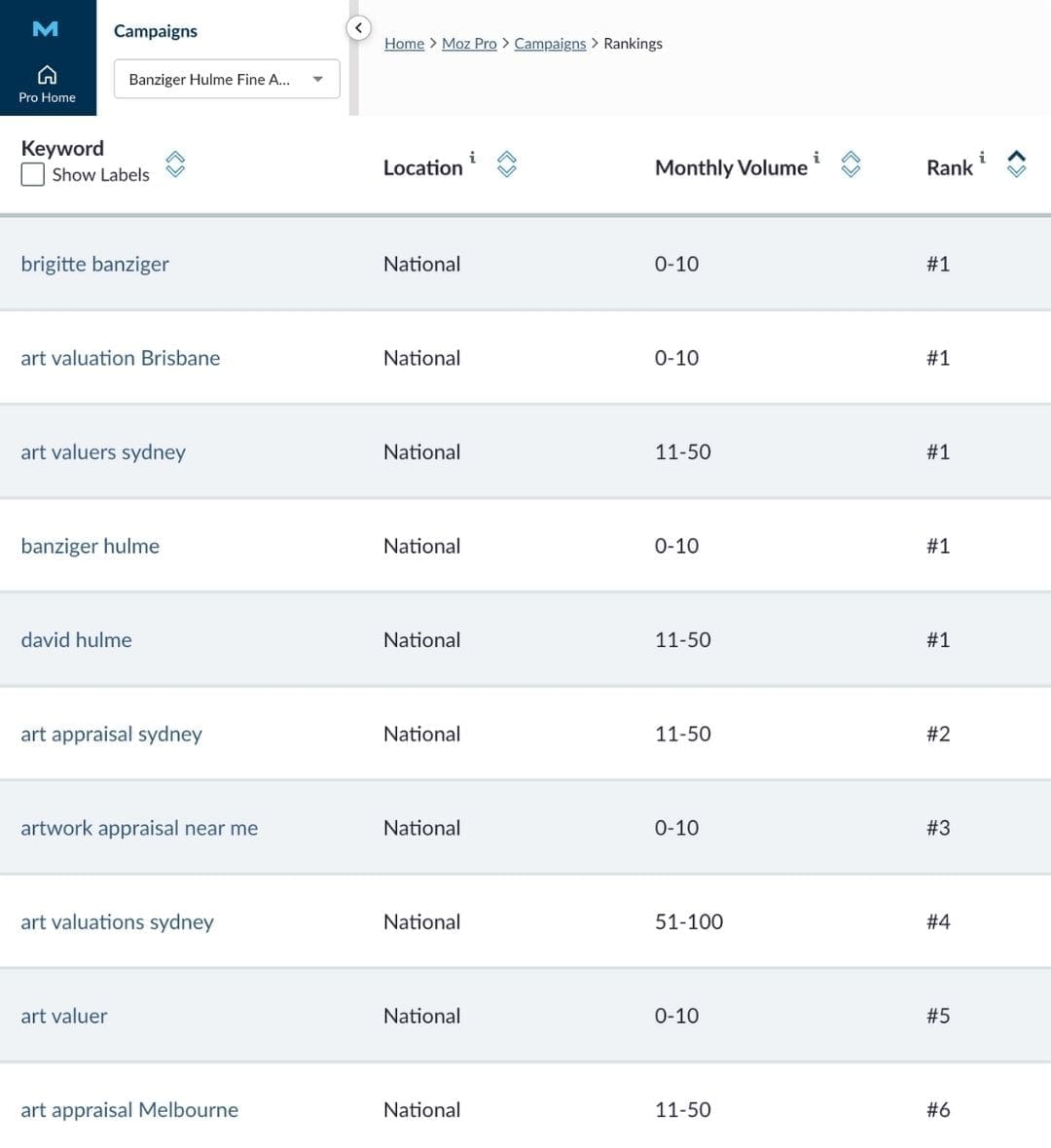
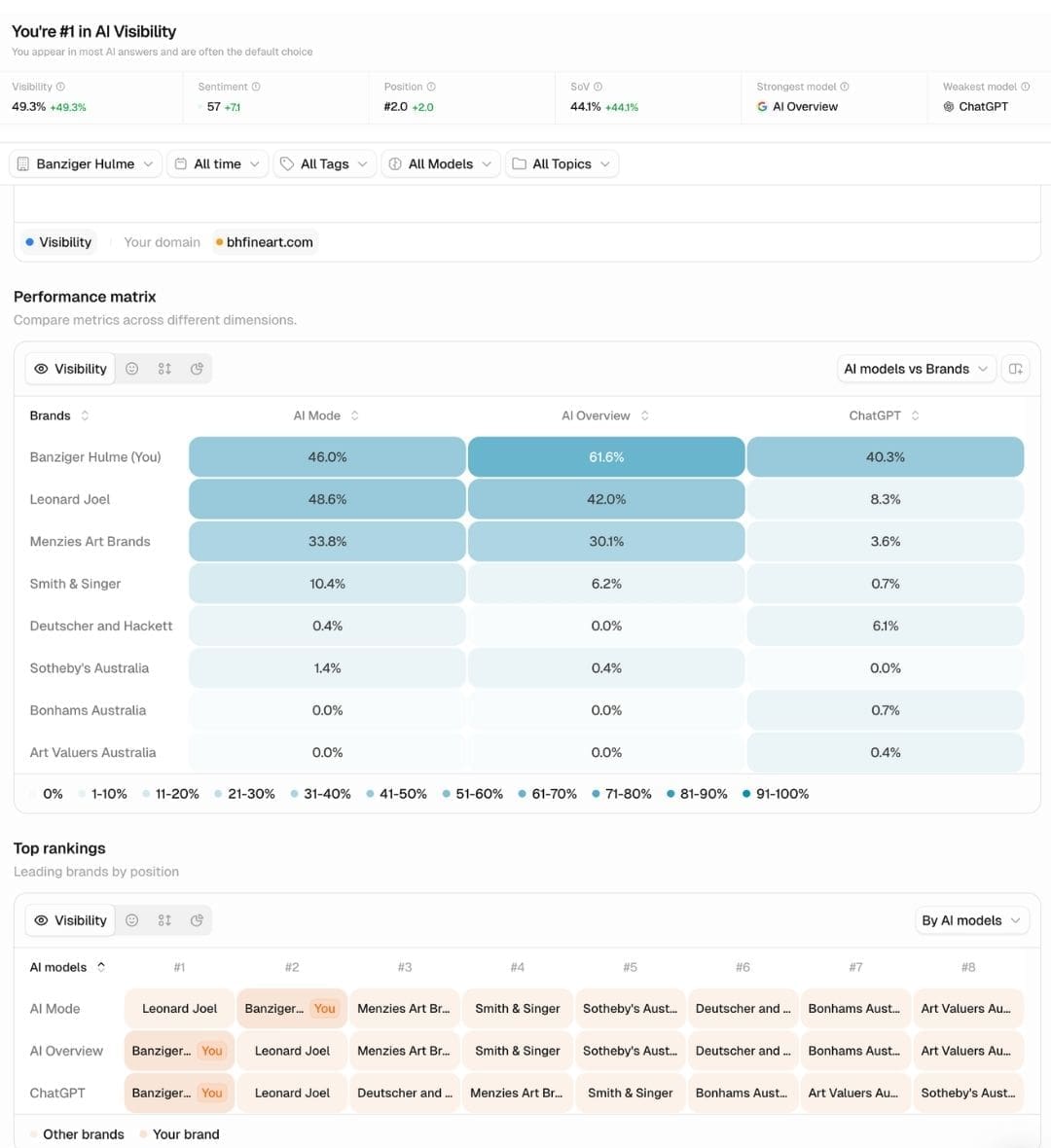
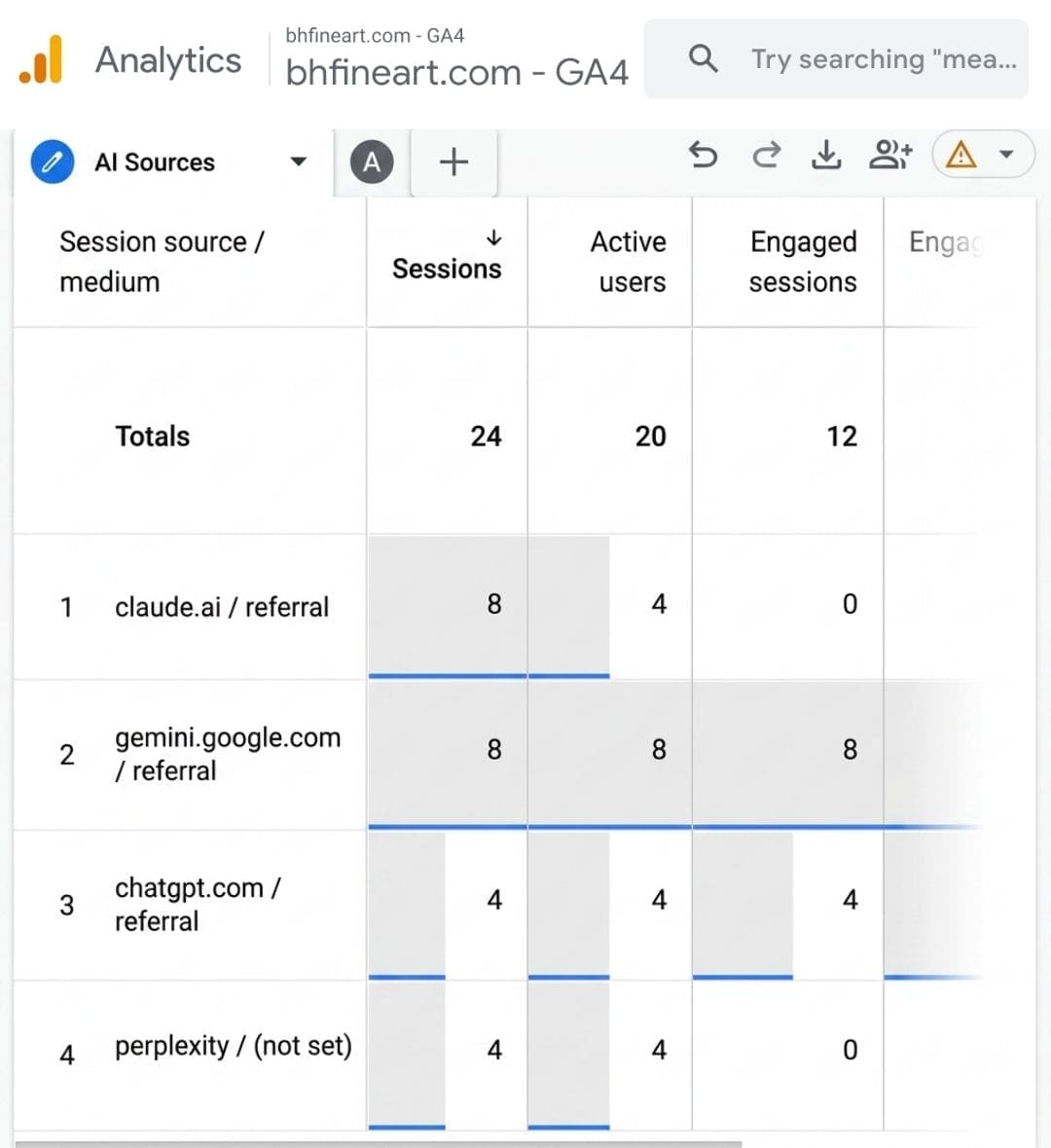
The results: SEO rankings, AI visibility and referral traffic
The results now tell a much bigger story than traditional SEO alone.
Banziger Hulme has achieved strong national visibility across high-value search terms, including #1 national rankings and top 3 placements for commercial-intent keywords in major Australian markets.
These are not vanity rankings.
They are the types of searches that indicate real buyer intent from people looking for specialist art valuation and appraisal services.
But the more important development is what comes next.
Banziger Hulme is now being tracked across AI visibility environments, giving us a clearer picture of how the brand appears inside AI-generated answers, recommendations and comparisons.
And referral traffic is now beginning to show in GA4 from AI platforms including ChatGPT, Gemini, Claude and Perplexity.
That matters because it proves the shift is no longer theoretical.
AI discovery is already showing up in analytics.
The search journey has changed, and Banziger Hulme is now positioned for both the current search landscape and the one emerging next.
Why AI Visibility matters now
Google still matters.
A lot.
But the front door to discovery has changed.
Buyers are no longer relying only on traditional search results. They are asking AI tools for recommendations, explanations, comparisons and shortlists.
That means a brand can rank well in Google but still be underrepresented in AI-generated answers.
It also means a brand can influence the buyer earlier, before that buyer ever reaches a website, fills out a form or compares providers manually.
This is the new visibility battleground.
Ahrefs research found that, across ChatGPT, Gemini, Copilot and Perplexity, only around 12% of cited URLs also appeared in Google’s top 10 results for the same prompt.
For Google AI Overviews specifically, Ahrefs’ updated research found that only around 38% of cited URLs also ranked in the top 10 for the same query.
The message is clear:
Ranking still matters, but ranking alone is no longer the whole game.
If your agency is only optimising for traditional search rankings, you may be missing the citations, mentions and recommendation environments that shape buyer decisions upstream.
The opportunity is not just to rank.
It is to become the brand that search engines and AI systems trust enough to recommend.
How we are extending Banziger Hulme’s visibility into AI search
Our work with Banziger Hulme is now evolving from traditional SEO into a broader SEO & AI Visibility system.
That includes strengthening the signals AI systems look for when deciding which brands, pages and sources to reference.
This work includes:
- clearer service and location architecture;
- stronger entity signals around the business, people and expertise;
- citation-focused content structure;
- content written in plain-English question-and-answer formats;
- improved internal linking between key commercial and informational pages;
- regular content updates to keep important pages fresh;
- and technical signposting to help crawlers understand the most important pages on the site.
The goal is to make Banziger Hulme easier to discover, easier to understand, and easier to cite.
Because in the AI-driven search environment, ambiguity is expensive.
If AI systems cannot confidently understand who you are, what you do, where you operate and why you are credible, they are less likely to recommend you.
Why this worked
This result did not come from one magic tactic.
It came from aligning the pieces most businesses treat separately.
The website looked more credible.
The service structure became clearer.
The technical foundations improved.
The content started matching real search intent.
The authority signals grew stronger.
The site remained stable through ongoing hosting and maintenance.
And now the same foundations are being extended into AI Visibility.
That is why the results have compounded.
Banziger Hulme did not just get a better website.
They got a stronger digital growth asset.
What this means for other service businesses
Most established service businesses do not have an expertise problem.
They have a visibility problem.
They are good at what they do, but their website, content and search presence do not make that obvious quickly enough.
That gap costs enquiries.
It costs trust.
And increasingly, it costs visibility inside AI-generated answers where future customers are forming opinions before they ever click through to a website.
If your website is dated, your service structure is unclear, your content is thin, your technical SEO is messy, or your authority signals are weak, you are making it harder for both people and search engines to choose you.
And if you are not thinking about AI Visibility yet, you are leaving the next layer of discovery to chance.
Banziger Hulme shows what happens when the foundations are fixed properly.
You do not just chase rankings.
You build the conditions that make rankings, citations and trust more likely.
Want to build the same kind of visibility?
Remap helps ambitious businesses build visibility across Google search, AI Overviews, ChatGPT, Gemini, Claude, Perplexity and the wider discovery journey.
We do not treat SEO as a checklist.
We build the system underneath it: strategy, website structure, technical SEO, content, authority, tracking, hosting and AI Visibility.
Because the brands that win the next phase of search will not be the ones that simply publish more content.
They will be the ones that are easiest to understand, easiest to trust and easiest to recommend.
Ready to see where your brand is visible — and where it is being left out?